
Fort Dodge Previous Resident Sources
The right starting source depends on the year. Modern assessment data provides a parcel crosswalk, while recorded instruments establish a title chain. Period directories and newspapers help identify occupancy and events. Early Webster County series become more important where online coverage stops.
| Source | Years covered | Where held | What it shows |
|---|---|---|---|
| Beacon assessment | Current assessment context | Webster County Assessor | Parcel ID, address, ownership label, STR |
| Land-record images and index | 1999 to present | Iowa Land Records, Recorder | Recorded parties, date, reference, land |
| Land-record index | 1994 to 1999 | Recorder portal and office | Index lead; image may need a request |
| LOC telephone directories | 1923 to 1944 | Library of Congress reel | Residential and classified address entries |
| Sanborn fire maps | 1912 set, 33 sheets | Library of Congress | Block, footprint, material, and use context |
| Newspaper research | Local papers from 1861; Messenger microfilm 1872 to 2019 | Fort Dodge Public Library | Moves, sales, fires, obituaries, probate notices |
| Early county series | Series-specific, beginning in the 1850s | SHSI and county offices | Deeds, town lots, homesteads, transfers, probate |
Use exact dates rather than treating a broad range as continuous coverage. The library does not publish a complete year-by-year directory inventory, and not every old land image appears online.
Start a Fort Dodge House Trail
Search the current address in Webster County Beacon. Save the parcel and alternate ID, exact property address, ownership label, city, reference number, and STR. These fields help distinguish two similar addresses and give the modern crosswalk to old land descriptions. Assessment ownership is not proof of occupancy or certified title.
Preserve the first address string. Then test directionals, numbered and spelled streets, short and full suffixes, units, and old numbers. Compare the Iowa DOT city map for corporate-limit context and USPS only for delivery formatting. A Fort Dodge postal label does not by itself place land within city limits.
The useful process flow is: old address or current address → Beacon parcel → legal-description clue → deed instrument → prior party → dated household source. Record uncertainty at each arrow.
Trace Webster County Owners Backward
The current owner gives the first party name for Iowa Land Records. The portal spans all Iowa counties and supports party role, date range, document type, image choice, and wildcard searches. An owner may appear as a person, business, estate, trust, or successor entity, so one exact-name query is rarely enough.
- Locate the modern parcel and preserve its STR or legal-description clue.
- Find the current grantee's purchase instrument. Save its date, grantor, reference, and land description.
- Search that grantor as a prior grantee. Use fewer name fields or a wildcard when spelling blocks a match.
- Repeat backward while the legal description remains consistent. Review plats, easements, affidavits, estate papers, and partial transfers when it changes.
- For dates before the online line, request book, page, instrument, Auditor transfer, or archival series from the correct custodian.
- Grantor
- The party transferring an interest in the recorded instrument.
- Grantee
- The party receiving that interest.
- Chain of title
- The sequence of recorded transfers for the same land.
- Legal description
- The lot, block, plat, or survey language that identifies land more reliably than an old street number.
The index proves that a document was recorded. Read or order the instrument before drawing a conclusion about what interest moved.
Fort Dodge's 1999 Record Line
Webster County's stated online split shapes every previous residents search. Images and indexing are available from 1999 forward. The 1994 to 1999 span has indexing, while older records may require office or archive work. A missing web image is not a missing deed.
The Iowa Land Records portal is the first official search view.
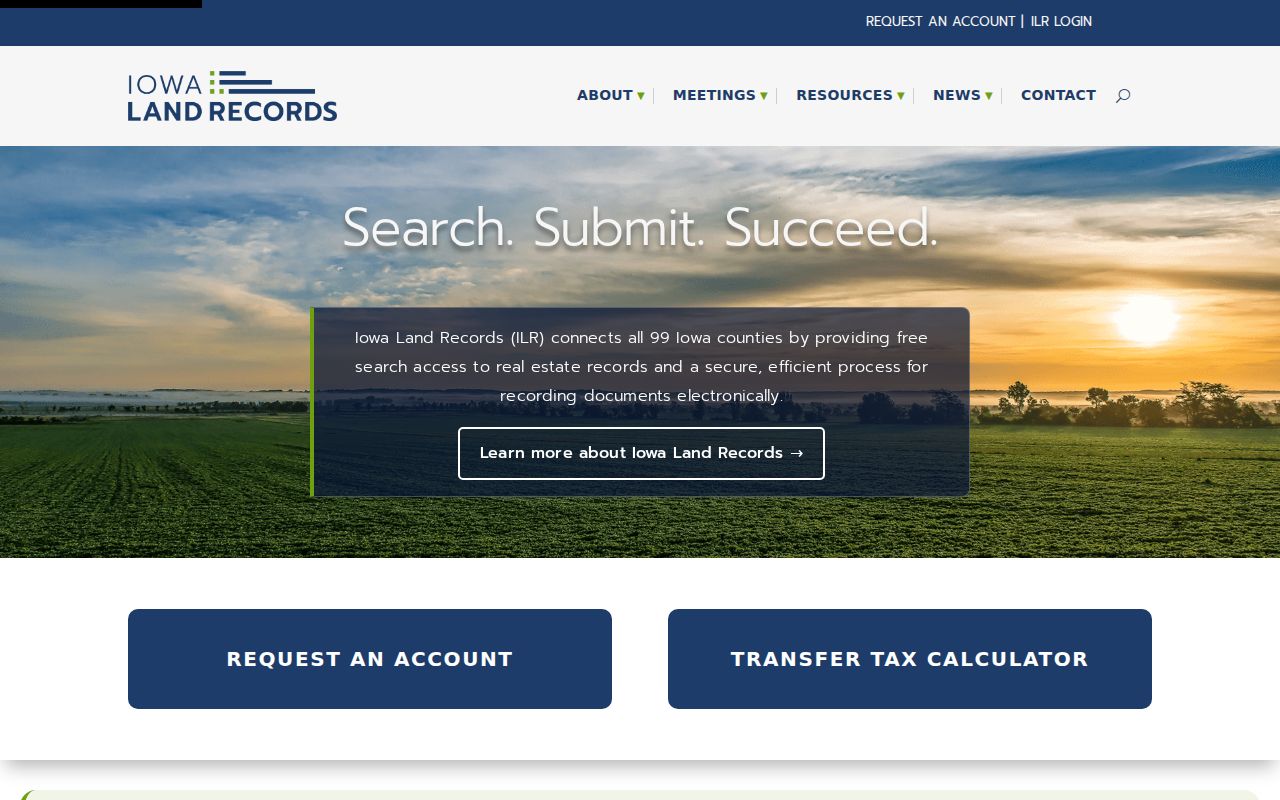
For an indexed record without an image, capture the result and contact the Webster County Recorder at 515-576-2401. Give the party names, date, type, reference, and legal description. Older copy guidance cited $0.50 per page, but confirm the current price and method before ordering.
Note: An online cutoff marks an access change, not the beginning of Fort Dodge ownership history.
Search Fort Dodge Legacy Deeds
Legacy help documents the controls that make old party searches repeatable: start and end dates, grantor or grantee, last and first name or company name, document types, image-only choice, result grouping, sorting, and the asterisk wildcard. Punctuation and common words may be normalized. The official tips say at least one criterion is needed and often favor fewer terms.
The Iowa Land Records legacy search help shows that interface and its rules.
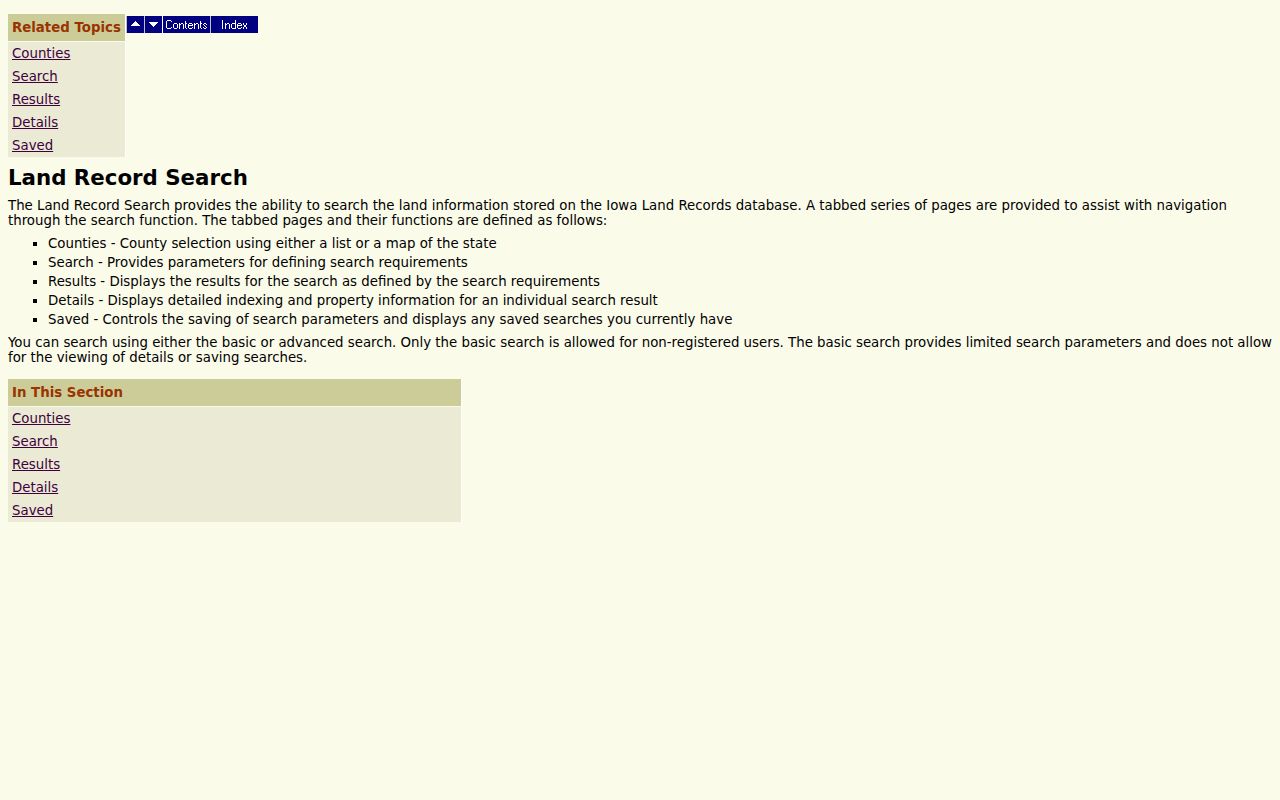
Fort Dodge legal-description searches may use the city code FD, including an Original Town FD reference. If a title moves into an estate, trust, or entity, search that name and related instrument types rather than assuming the family or address trail ended.
Verify Fort Dodge Land Images
A portal index and a document image serve different roles. Save the index fields first, then inspect the image for the parties' roles, legal description, execution and recording dates, and any referenced prior instrument. The same surname on two results does not prove the same person or parcel.
The Webster County external land-record viewer is an additional official access path.
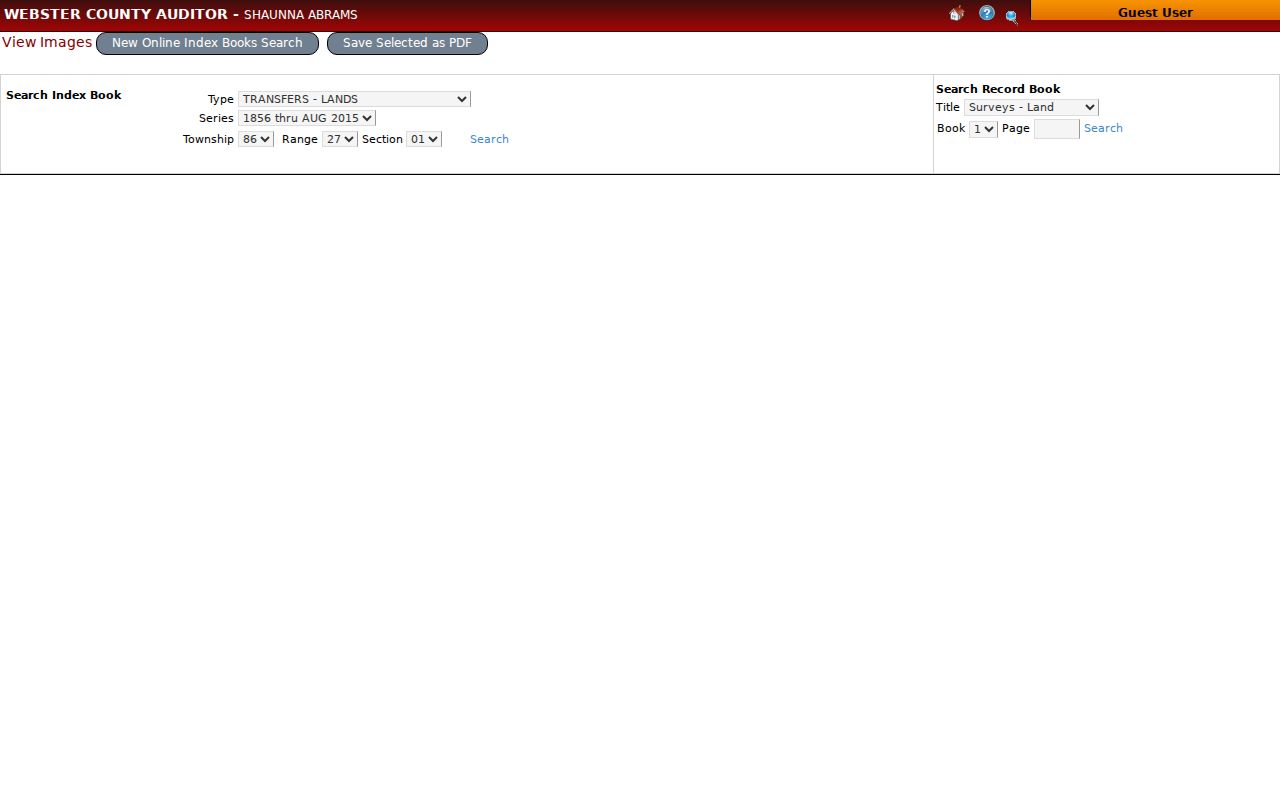
If a page cannot be viewed, use the Recorder counter, phone, or mail route. The office is at the Webster County courthouse, 701 Central Avenue. An office request should name the record sought, not ask staff to assemble a complete house history.
See Fort Dodge Before Names
The 1912 Fort Dodge Sanborn map set gives 33 sheets of block and building evidence. It may show a footprint, alley, construction material, fire wall, or labeled use. It does not prove ownership and may predate a later number or structure.
A federal HABS study for 16 through 22 South Sixth Street demonstrates the method. Researchers paired Sanborn information with a 1928 directory street index that named businesses and people at several numbers. The value is the sequence, not a claim about the block now: locate the sheet, record the address form, read the dated directory, then test the deed and newspaper trail.
Plat maps add the lot and block link. If the street number changed, a recorded plat or consistent legal description can bridge the old address to today's parcel. Cite the map date and sheet every time.
Place Fort Dodge Past Residents
Owners are only one part of a house story. A directory can place a named resident or business at an address in its publication year. The Library of Congress reel covers Fort Dodge white and yellow pages from 1923 through 1944. Entries may use initials, abbreviations, “res,” telephone exchanges, business classes, or upper-floor notation. The broader Fort Dodge city directory page explains those collections.
- Choose a target year and copy the directory entry exactly, including spelling and abbreviation.
- Find the closest released federal or state census available through library resources. Record the household and enumeration context shown.
- Compare the street, number, ages, names, and relationships without forcing a match.
- Search the newspaper around moves, sales, fires, deaths, and probate events.
- Use cemetery, vital, or court sources only through their lawful access routes.
Census and directory evidence can show period presence. Neither establishes recorded ownership unless supported by the deed chain. Later newspapers should be used with care for living people.
Fort Dodge Newspapers Date Moves
The Fort Dodge Public Library local-history collection is the practical bridge across address gaps. It reports local newspaper holdings back to 1861 and Messenger microfilm from 1872 through 2019, plus directories, plat maps, yearbooks, census databases, and local indexes. A remote request works best with a name and an approximate date, month, or year.
News items can date a real-estate transfer, move, fire, remodel, legal notice, obituary, or probate matter. Save publication, date, page, and the exact address form. The library notes that some post-1924 scans may be limited to its computers or Wi-Fi, so remote access should not be promised. Staff research, a visit, or a targeted copy request is the fallback.
Historical Society Room 143 in the library is volunteer staffed and may require an appointment. The Webster County Genealogical Society at the Fort Museum and the State Historical Society of Iowa add archival routes when the library shelf does not settle the identity.
Early Webster Address Records
State Historical Society holdings reach behind the modern portal. The Webster County table identifies deeds and town-lot records from 1855 or 1856 through 1902, homestead records from 1873 through 1928 with an index extending through 1968, and Auditor real-estate transfers into 1976 or 1977. It also lists early probate, naturalization, marriage, birth, death, affidavit, power, and chattel-mortgage series.
Those ranges are archival navigation tools. They do not mean every Fort Dodge address appears in every series. Begin with the record type, date, party, plat, and legal description. Ask the State Historical Society of Iowa Webster County collection or county office for the specific series.
The gap after the early deed series and before modern online access is not a lost century. The Recorder, Auditor, library, and state archive may bridge it through separate indexes and transfer books.
Use Fort Dodge Previous Records Safely
A strong previous residents timeline distinguishes four claims: assessed ownership, recorded title, period occupancy, and an event linked to the address. List the year, source, address form, named person or entity, and strength of each claim. Mark unresolved changes instead of smoothing them away.
Protected addresses and private details should not be reconstructed. Iowa Safe at Home provides substitute-address and confidential-voter-registration protections for eligible survivors. Vital records are also controlled, with identity and entitlement rules. Historical curiosity does not override those limits.
Lawful use. Research Fort Dodge past residents for family history, estate work, and a careful house timeline. Never use the trail to locate, pressure, stalk, harass, or harm a living person.
End the trail where evidence ends. A deed may name an estate but not every heir. An obituary may name relatives but not establish title. A dated, qualified conclusion is more useful than an unsupported complete list.