
Finding Fort Dodge Residents
The most useful first source depends on what is known. An address belongs in the Webster County Beacon property search. It can identify the parcel, its assessed owner, and the mailing address recorded for assessment. A name can be checked in Iowa Courts Online, the state voter lookup, or a record-specific index. An older name or address belongs in the Fort Dodge Public Library's local-history collection. Each source answers a narrow question. None is a complete residents directory, and an owner, voter, litigant, or directory entry should not be treated as proof of a present household.
Work from the broadest reliable fact toward a second, independent match. Keep the source name, date checked, spelling, and identifier with each result. A parcel ID, case number, directory year, or recorded document number is more useful than an unlabelled name. It also makes a follow-up request much easier for the office that holds the record.
- Enter a current address or owner name in Webster County Beacon and record the parcel ID.
- Use first name, last name, and ZIP in Iowa's voter lookup when election information is relevant.
- Move an owner name into Iowa Land Records to locate deeds and other recorded instruments.
- For an older household, check library directories, newspapers, maps, and local indexes by year.
- Ask the correct custodian for a specific existing record when an online index stops short.
Official rolls omit many people. A renter may not appear on a property card. A person who is not registered to vote will not appear through the voter tool. Historical volumes can miss a household between publication years. Those gaps are reasons to change sources, not to guess.
Fort Dodge Directory Record Keepers
Several Webster County offices share the courthouse at 701 Central Avenue. The Recorder keeps land instruments and eligible vital-record copies. The Assessor maintains parcel and assessment data. The Auditor serves as Commissioner of Elections and handles local election administration and real-estate transfer records. Their records overlap, but the offices do not certify each other's work. Call the keeper before a trip when a certified copy, an older volume, or counter help is needed. Regular county hours in the research are weekdays from 8:00 a.m. to 4:30 p.m.; holidays and service-specific cutoffs can change.
Webster County Assessor
701 Central Ave., second floor
Fort Dodge, IA 50501
515-576-4721
Webster County Elections
701 Central Ave.
Fort Dodge, IA 50501
515-573-7175
Search Fort Dodge Parcels First
Beacon is the strongest address-first tool in the Fort Dodge residents directory. The county's search supports an owner name, property address, parcel ID, or alternate ID. Results can show the parcel and alternate identifiers, situs address, ownership, city, assessed-value context, reference number, and township-range-section data. A situs address is the physical location used for the parcel. It may differ from the owner's mailing address, so those two fields should never be merged.
The county assessor explains the assessment role and links to Beacon. The online card is a discovery record, not a deed or survey. Once the parcel ID is known, use the map to check adjoining land and carry the owner name into the Recorder's index. For full address-by-address work, the Fort Dodge street directory keeps that sequence focused on the street.
| Beacon field | Use in a directory search |
|---|---|
| Name | Find parcels tied to an assessed owner |
| Address | Locate the physical parcel record |
| Parcel ID | Distinguish land with a stable county identifier |
| Alternate ID | Try the secondary identifier shown by county data |
The Webster County government page provides the courthouse context shown in the captured office view.
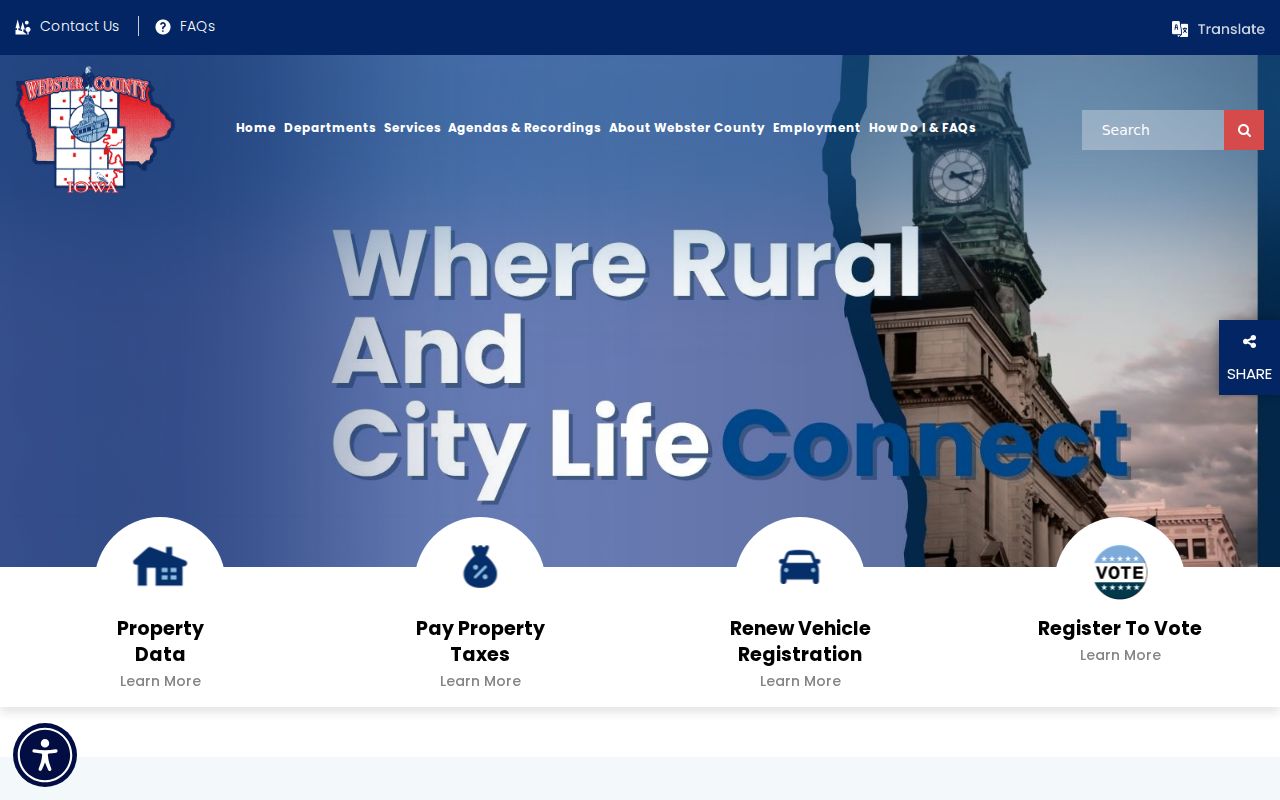
That office directory is the fallback when the dynamic parcel tool does not load or an older card needs staff help.
Fort Dodge Deeds Name Parties
Iowa Land Records carries the statewide recorder index, including Webster County instruments. Search by grantor or grantee, date range, document type, county, and related reference fields. A grantor transfers an interest; a grantee receives it. The recorded party may be an individual, estate, lender, company, or trust. That makes the index valuable, but it does not turn every named party into a current Fort Dodge resident.
The Recorder's land-record page documents the local counter, a 3:00 p.m. recording cutoff, and the route to online records. When the index supplies only a citation or an image cannot be viewed, note the instrument number, book and page, party names, and recording date. Ask the Recorder about a copy through the office, by mail, phone, or the available online channel. Older county series also appear in the State Historical Society of Iowa holdings.
- Roll
- A maintained list, such as property or voter data, made for an official purpose.
- Index
- A finding aid that points to a record; it is not always the record image.
- Parcel
- A unit of land identified by the county for mapping and assessment.
- Criss-cross directory
- A directory arranged by street or phone number instead of only by surname.
Iowa Voter Lookup in Fort Dodge
The Iowa Secretary of State voter lookup asks for a required first name, last name, and five-digit ZIP. It is designed to return voter and polling information to the voter, not to act as an unrestricted roster of Fort Dodge households. Spelling, registration status, and ZIP changes can affect a match. The Webster County Auditor is the local correction and explanation point when the state tool looks stale or a special-election detail is unclear.
Formal voter-list requests follow a separate state process. Iowa's request form asks for the requester, the permitted purpose, geography, format, and selected fields. State rules bar commercial use. Do not infer a private address from the absence or presence of a name. Iowa's Safe at Home program provides eligible survivors with a substitute address, mail forwarding, and confidential voter registration.
The official Iowa voter lookup shows the exact fields in this captured form.
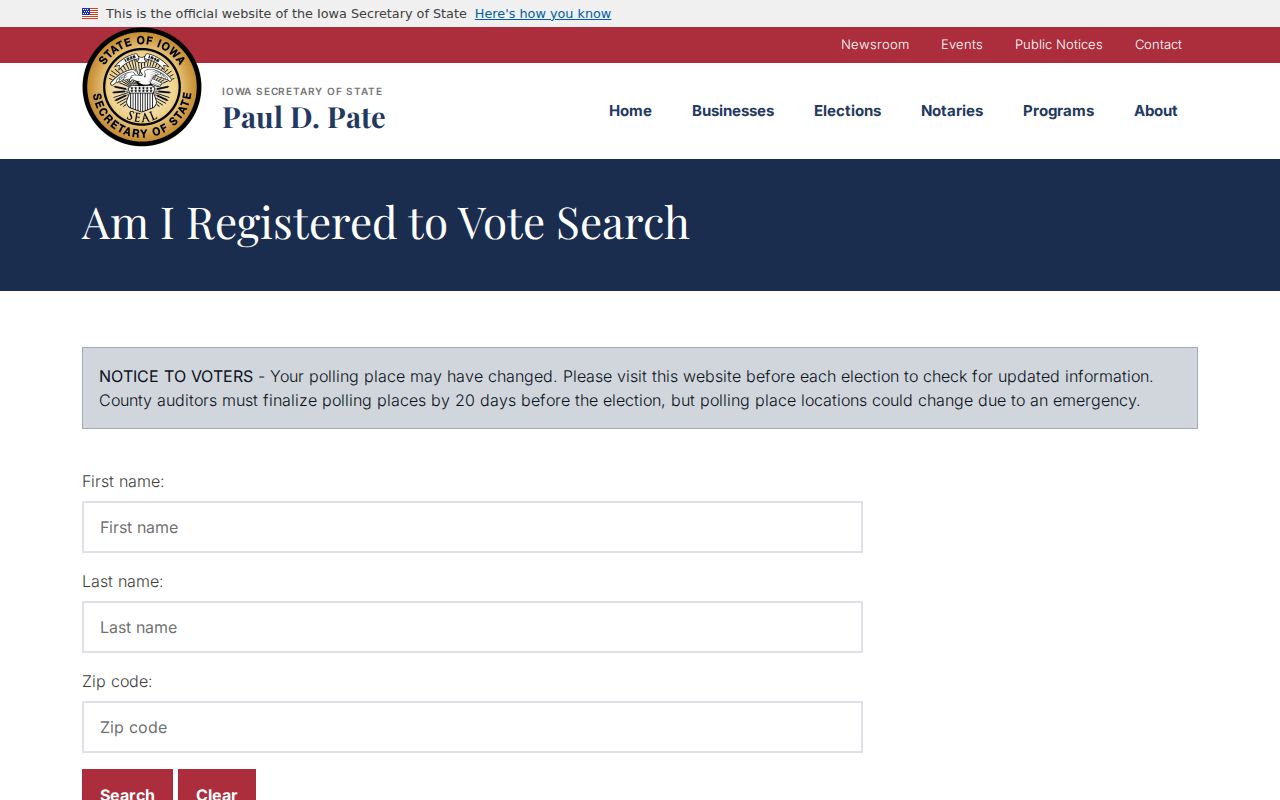
The required ZIP makes a current postal value important, but it does not define Fort Dodge's city boundary.
Current Fort Dodge Resident Rolls
Modern directory work is split among official systems created for assessment, elections, land recording, courts, and licensing. Coverage depends on the purpose of each record. The best result identifies both the person and the role in which the name appears. A property owner, registered voter, deed party, court party, or licensed professional is not the same category. Dates matter because each keeper updates on its own cycle.
| Source | Who It Lists | Keeper | Access |
|---|---|---|---|
| Beacon property roll | Assessed owners | Webster County Assessor | Free web search |
| Iowa voter lookup | A voter's registration and polling details | Secretary of State and County Auditor | Name and ZIP form |
| Iowa Land Records | Parties to recorded land instruments | Webster County Recorder | Free account/search path |
| Iowa Courts Online | Parties in public docket information | Iowa Judicial Branch | Free public index; more at terminal |
| LicensedInIowa.gov | State-regulated license holders | Iowa licensing boards | Free web search |
Use a current roll to confirm one fact, then compare it with another source when identity matters. The court index supports searches by party details and case identifiers, while professional licensing can confirm a board, status, city, ZIP, or license number. The focused Fort Dodge resident lookup explains how to keep same-name records apart.
Fort Dodge Court Name Checks
Iowa Courts Online publishes free public docket information for state trial and appellate cases. Search options described in the court help include a name, date of birth where available, case ID, and other case filters. A docket is the court's event and filing log. It can show that a person with a given name appears in a case, but the name alone may not establish identity. Check county, case type, dates, and case number before connecting the result to a Fort Dodge resident.
Some documents and details require a courthouse terminal or paid access. The Webster County Clerk of Court is at 701 Central Avenue and can explain local access. A public index is not a certified copy. If a filing is needed for an estate, family-history question, or other lawful purpose, request the exact case record rather than asking staff to build a person profile.
Fort Dodge Records by Request
Iowa Code Chapter 22 supplies the general route to examine and copy public records unless an exception applies. A request may be made in person, in writing, by phone, or electronically. The right reaches existing records; it does not require an office to create a new residents directory or research a person's life. Narrow requests work best. Name the custodian, record series, person or address, date range, and preferred format. Ask for the nonconfidential portion if part of a record must be withheld.
Fort Dodge Police has its own public-information page. Basic incident facts may be open unless release would harm an active investigation. The city says requests taking 30 minutes or less to locate, review, and produce have no charge. Extensive media or redaction work may carry Chapter 22 fees and a 50 percent nonrefundable prepayment. Jail records are held by the Webster County Sheriff, not City Police, and the research found no public online county roster.
The Iowa Public Information Board guidance explains the state process shown here.
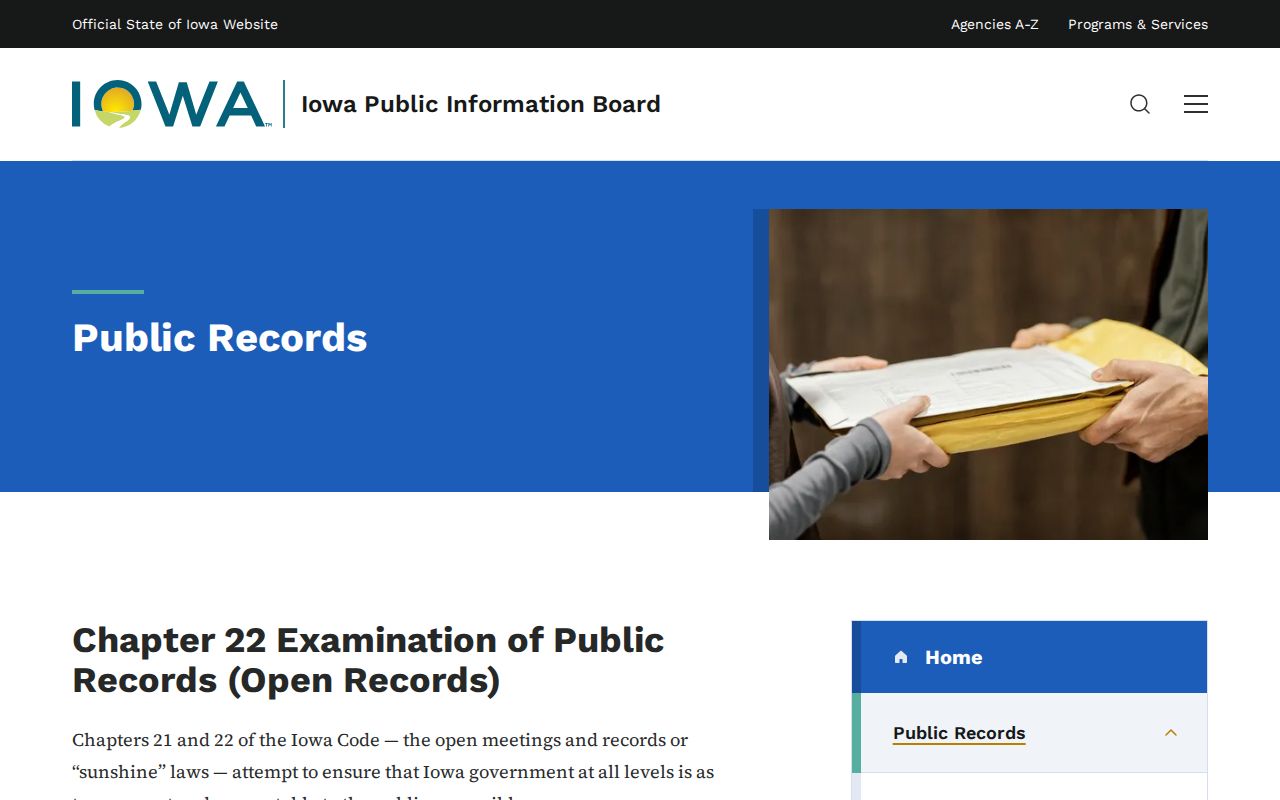
Use that guidance to frame a precise request, then send it to the city, county, court, or state office that actually keeps the record.
Fort Dodge Vital Record Boundaries
Birth, death, and marriage records do not work like open name directories. Iowa HHS states that state vital records are closed to general public inspection. A certified copy requires an application, event details, proof of entitlement, current government photo identification, and the stated $20 search-and-copy fee. Eligible Webster County records can also be requested through the Recorder in person or by mail. A phone card payment has a stated 3 percent surcharge.
For family history, begin with public library newspaper, cemetery, marriage, birth, and baptism indexes before ordering a controlled record. Those finding aids may establish a date or place without implying that the underlying certificate is open. The Iowa HHS access page is captured below.
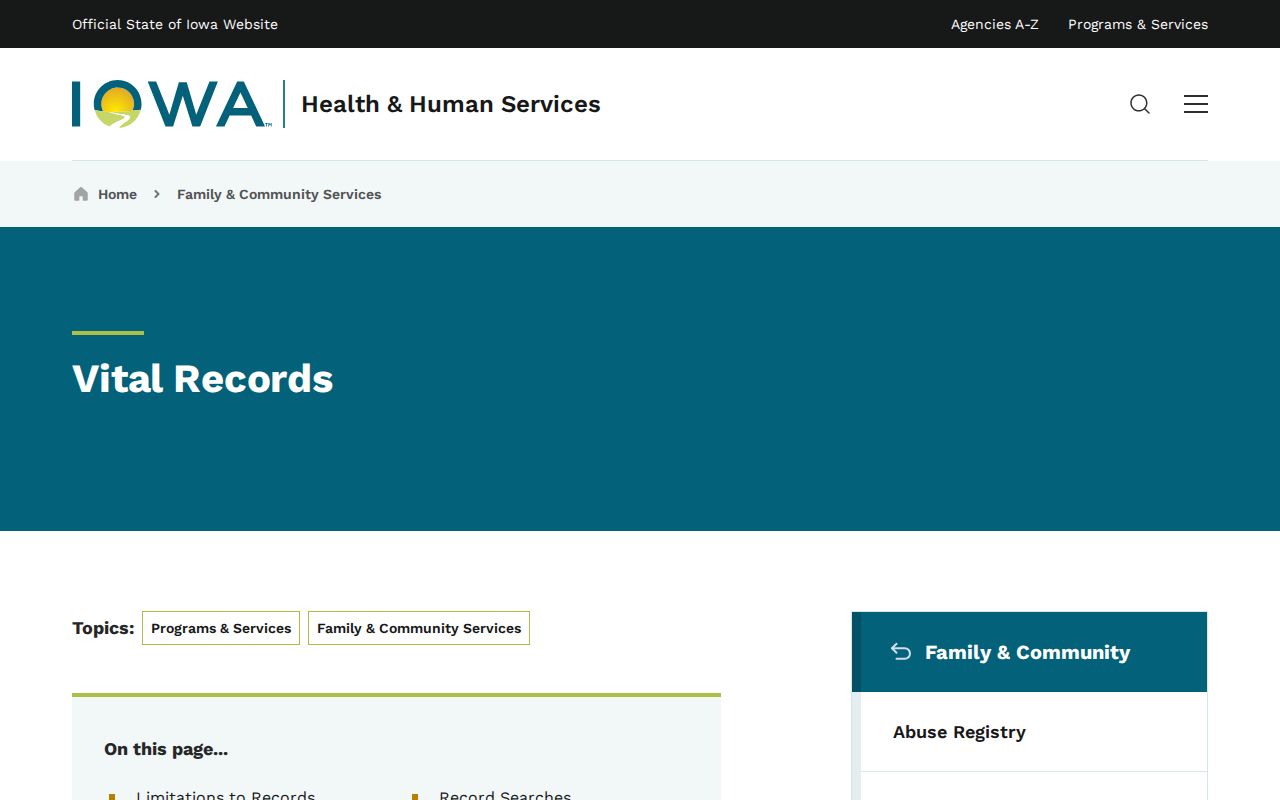
The image reinforces the difference between a public clue and a certified government record.
Same Names in Fort Dodge
Repeated names are common across court, property, directory, and newspaper searches. Do not join two results because the spelling matches. Compare a middle name or initial, age or date of birth where lawfully shown, parcel ID, case number, spouse or household name, occupation, and date. A source label belongs beside each fact. It should say whether the result came from Beacon, a court docket, a printed directory, or a newspaper page.
Time is the best filter. A person listed on a 1930s directory page cannot be treated as the assessed owner on a current parcel card without a documented chain between them. Likewise, an old newspaper address may have changed numbering or use. Record contradictions instead of forcing a match. Staff at the library, Recorder, Assessor, and Clerk can often explain the limits of their own index.
Historical Fort Dodge Resident Directories
The Fort Dodge Public Library at 424 Central Avenue holds the city's strongest local-history starting point. Its collection includes city directories, plat maps, yearbooks, a microfilm reader-printer, local newspapers reaching back to 1861, and Fort Dodge Messenger microfilm from 1872 through 2019. Staff offer limited remote research. The Webster County Historical Society also keeps a volunteer-run room inside the library, so confirm staffing or arrange an appointment before visiting.
The Library of Congress provides a digitized Fort Dodge white and yellow pages reel covering 1923 through 1944. A directory entry can connect a name with a street address, spouse, occupation, or business, depending on the year and key. Compare adjacent years because publication dates and household moves can leave gaps. The full collection and entry-reading method belong in the Fort Dodge city directory.
Fort Dodge Newspapers Extend Directory Clues
A directory supplies a compact entry. A newspaper can add the dated event around it. The library's local and Webster County newspaper archive spans titles and years that do not perfectly match the Messenger microfilm run, so search both. Addresses can appear in legal notices, property transfers, fires, construction reports, advertisements, obituaries, and social columns. Search surname variants as well as the street number.
The 2025 library board materials document a new digitization effort for remaining Messenger microfilm. Public-domain years were planned for the existing site, while years still under copyright were to be available through a separate in-library service. That is a current access change. Check the library page before relying on one archive link or assuming all years are visible from home.
From Fort Dodge Parcel to Map
Historical address work becomes stronger when present and past maps are paired. Start with the current Beacon parcel and save its identifier. The Library of Congress Sanborn collection has a 1912 Fort Dodge set with 33 sheets. Sanborn fire-insurance maps show building footprints, construction traits, street names, lot context, and industrial uses from their date. They do not name every occupant and are not current surveys.
The State Historical Society of Iowa lists Webster County deeds, town lots, probate, naturalization, vital, and tax-record series with their own date ranges. Those holdings can bridge a gap left by the web portals or local shelves. Fort Dodge grew around the Des Moines River and Lizard Creek junction, the fort site, and Central Avenue. Tie that history to cited plats, maps, deeds, and dated directory entries rather than folklore.
Note: Save the map year, sheet number, directory page, parcel ID, and document citation so another researcher can retrace the Fort Dodge record chain.
Official Fort Dodge Rolls Compare Better
Official systems can be slower than commercial people-finder tools, but their record labels and custodians make them easier to check. Commercial results often merge people with similar names, hide dates, or charge before showing the source. Describe them as leads at most. Never treat a compiled profile as an official finding.
| Choice | Strength | Limit |
|---|---|---|
| Official index | Named keeper, defined purpose, record identifier | May cover only one role or time |
| Certified copy | Issued by the custodian for an identified record | May require entitlement, fee, or in-person steps |
| Commercial compilation | Fast broad lead | Source, date, and identity may be unclear |
The Fort Dodge residents directory works best as a route to the original keeper. Verify a parcel with the Assessor, a deed with the Recorder, a docket with the court, an election question with the Auditor, and a historical entry with the library or archive.